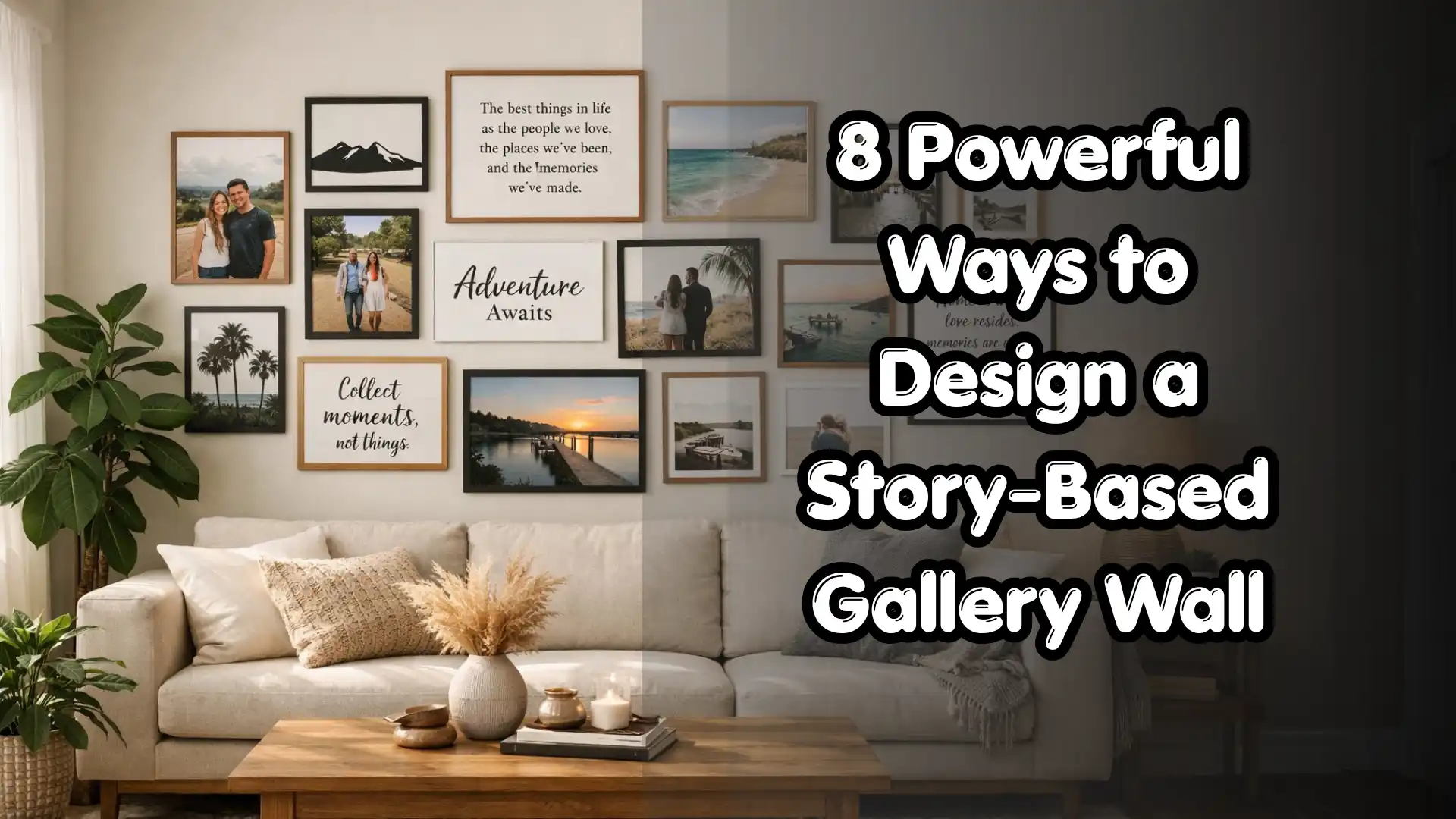
8 Powerful Ways to Design a Story-Based Gallery Wall That Reflects Your Personality
A home is more than just a place to live. It is a reflection of your identity, your experiences, and your personal journey. Every detail you include in your space contributes to how it feels and how it represents you. While furniture and color palettes play a significant role in interior design, wall decor often carries the deepest emotional value. Among all decorative options, a gallery wall stands out as one of the most meaningful ways to personalize your home.
A story-based gallery wall goes beyond aesthetics. Instead of simply arranging artwork for visual appeal, it transforms your wall into a narrative that reflects your life, passions, and memories. It allows you to display moments that matter, showcase creativity, and create a connection between your space and your personality. Whether you prefer a minimalist approach or a bold, eclectic display, designing a gallery wall with intention can elevate your entire home.
This guide will walk you through the process of creating a gallery wall that is not only visually balanced but also deeply personal, cohesive, and timeless.
Table of Contents
1. Define Your Personal Story
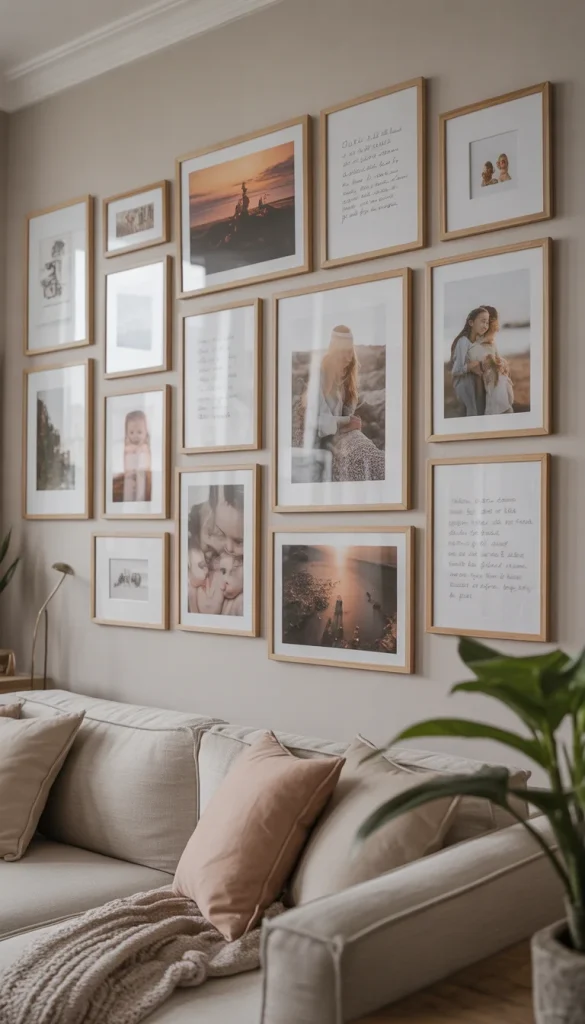
Before you begin choosing frames or arranging artwork, it is essential to understand the story you want your gallery wall to tell. This step sets the foundation for your entire design and ensures that every piece you include has meaning and purpose. Without a clear direction, a gallery wall can easily become a random collection of items rather than a cohesive visual narrative.
Your personal story can be inspired by many aspects of your life. It might reflect your journey, highlight important milestones, or showcase the things that bring you joy. Some people prefer to focus on family memories, while others may lean toward creative expression or travel experiences. The key is to choose a direction that feels authentic to you rather than trying to follow trends or replicate someone else’s style.
- Life Journey – Include milestones such as graduations, achievements, or meaningful life events
- Passions & Interests – Showcase hobbies like photography, music, or travel
- Emotional Moments – Highlight memories that bring happiness or nostalgia
- Personal Growth – Represent how your tastes and experiences have evolved over time
When you define your story clearly, it becomes easier to make decisions about what to include and what to leave out. This clarity helps maintain consistency and ensures that your gallery wall feels intentional rather than accidental.
Taking time to reflect on your story also makes the process more enjoyable. Instead of focusing solely on decoration, you begin to see your wall as a meaningful project that represents who you are. This emotional connection is what makes a story-based gallery wall truly special.
Designer Pro Tip: Don’t rush this step your gallery wall will feel more authentic when it is built around a story that genuinely represents you.
2. Choose a Consistent Theme
Once you have defined your personal story, the next step is to translate that story into a clear and consistent theme. A theme acts as a guiding framework that keeps your gallery wall visually cohesive and easy to understand. Without a theme, even meaningful items can appear disconnected and cluttered.
A theme does not mean everything has to look identical. Instead, it ensures that all elements share a common visual language. This could be achieved through color, subject matter, style, or mood. For example, a travel themed gallery wall might include maps, destination photos, and postcards, all tied together by a similar color palette or framing style.
- Travel Theme – Maps, landscapes, postcards, and cultural elements
- Family Theme – Portraits, candid moments, and milestone photos
- Minimalist Theme – Simple compositions, neutral tones, and clean lines
- Vintage Theme – Antique frames, sepia-toned photos, and nostalgic elements
- Art-Focused Theme – Paintings, sketches, and creative expressions
Choosing a theme helps simplify decision making. Instead of wondering whether a piece fits, you can easily evaluate it based on how well it aligns with your chosen direction. This reduces the chances of overcrowding your wall with unrelated items.
Additionally, a consistent theme enhances the overall visual impact. When everything feels connected, your gallery wall appears more polished and professionally designed, even if it is entirely DIY.
Designer Pro Tip: Stick to a maximum of two or three visual themes to avoid overwhelming the space.
3. Select Meaningful Pieces
The success of your gallery wall depends heavily on the items you choose to display. These pieces form the core of your story and determine how your wall will be perceived. Selecting meaningful items ensures that your gallery wall remains timeless and emotionally engaging.
It can be tempting to fill your wall quickly, but it is better to take a thoughtful approach. Each piece should contribute to your narrative and hold personal significance. This could include photographs, artwork, or even small objects that represent important memories.
- Personal Photos – Capture moments with family, friends, and special occasions
- Artwork & Prints – Reflect your aesthetic preferences and creative taste
- Memorabilia – Include items like tickets, letters, or travel souvenirs
- Inspirational Quotes – Add words that motivate or resonate with you
- Handmade Pieces – Showcase DIY or custom artwork for a personal touch
Avoid using filler items that do not have meaning. While they may help fill empty space, they can dilute the overall impact of your gallery wall. Instead, focus on quality over quantity.
A well curated selection creates a stronger emotional connection and makes your gallery wall more engaging for both you and your guests. It transforms your wall into a conversation piece rather than just decoration.
Designer Pro Tip: If a piece doesn’t evoke a memory or feeling, consider leaving it out.
4. Use Frames to Enhance Style
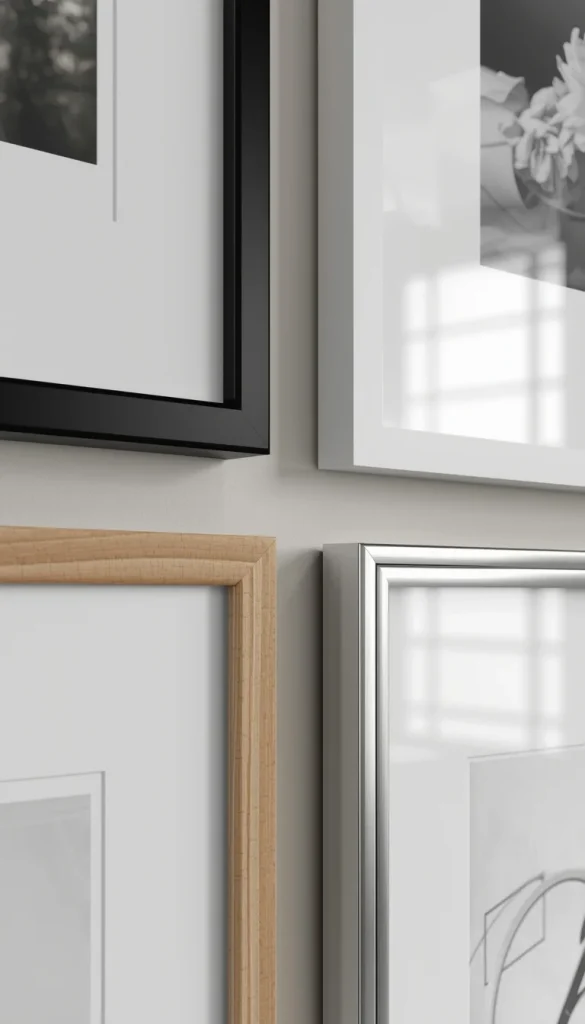
Frames are often overlooked, but they play a crucial role in shaping the overall appearance of your gallery wall. They act as a unifying element that ties all your pieces together and enhances their visual impact.
Choosing the right frames depends on the style you want to achieve. Some people prefer a clean and uniform look, while others enjoy mixing different styles for a more eclectic feel. Both approaches can work beautifully when executed thoughtfully.
- Uniform Frames – Create a clean, modern, and structured look
- Mixed Frames – Add personality and an artistic, collected feel
- Wood Frames – Bring warmth and a natural touch
- Metal Frames – Offer a sleek and contemporary appearance
- Frameless Options – Perfect for minimalist designs
Consistency is key when selecting frames. Even if you mix styles, there should be a common element such as color or material that ties everything together.
Frames also help highlight your artwork and protect it over time. Investing in good quality frames ensures that your gallery wall remains durable and visually appealing.
Designer Pro Tip: Choose frames that complement your room’s color palette rather than compete with it.
Explore 8 powerful techniques to design a story-based gallery wall that truly reflects your personality. From choosing the right frames to arranging your most cherished memories, this video guides you step by step in creating a visually stunning and meaningful wall display that tells your unique story.
5. Plan Your Layout Carefully
Planning your layout before hanging anything on the wall is essential for achieving a polished result. Without proper planning, it is easy to end up with uneven spacing, misaligned frames, or unnecessary holes in your wall.
There are several layout styles you can choose from, depending on your preference and the type of story you want to tell. Each style offers a different visual effect and level of structure.
- Grid Layout – Symmetrical and highly organized
- Salon Style – Asymmetrical and artistic
- Centered Layout – Focuses on one main piece
- Linear Layout – Clean and minimal arrangement
A helpful technique is to use paper templates that match the size of your frames. Tape them to the wall and experiment with different arrangements until you find the one that works best.
Planning also allows you to maintain consistent spacing and alignment, which are key factors in creating a visually pleasing gallery wall.
Designer Pro Tip: Always take a photo of your planned layout and it helps you spot imbalances before hanging.
6. Create Visual Balance and Flow
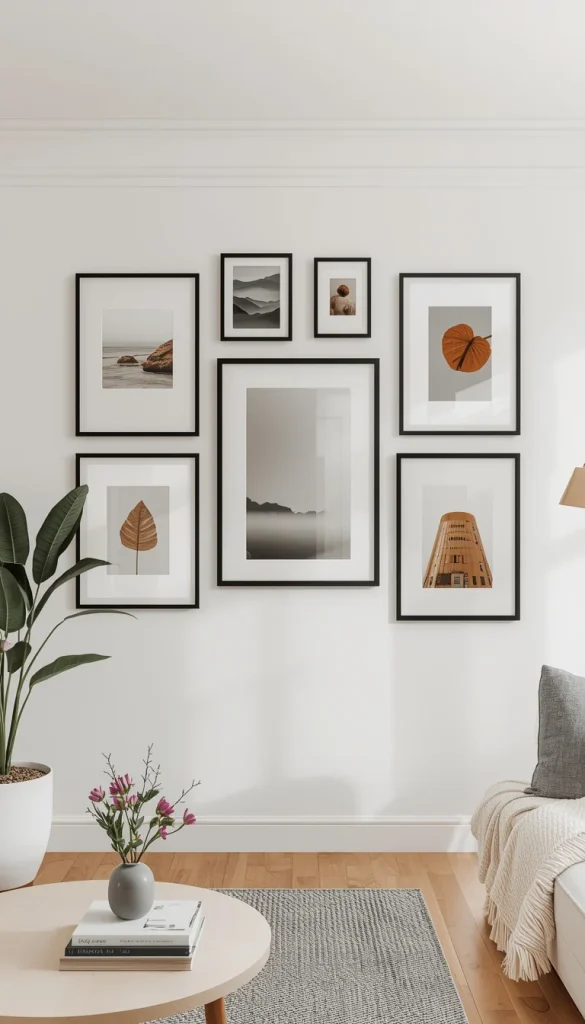
A gallery wall should feel balanced, even if it is not perfectly symmetrical. Visual balance ensures that no area feels too heavy or too empty, creating a harmonious overall look.
Achieving balance involves careful placement of different elements. You need to consider size, color, and orientation to create a natural flow that guides the viewer’s eye across the wall.
- Mix Sizes – Combine large and small pieces for variety
- Distribute Colors – Spread colors evenly throughout the wall
- Vary Orientation – Use both horizontal and vertical frames
- Avoid Clustering – Prevent overcrowding in one area
A focal point can also help anchor your design. This could be your largest piece or the most visually striking item on the wall.
When balance is achieved, your gallery wall feels intentional and comfortable to look at. It enhances the overall atmosphere of your room without overwhelming it.
Designer Pro Tip: Step back frequently during the process to evaluate the overall composition.
7. Add Depth and Texture
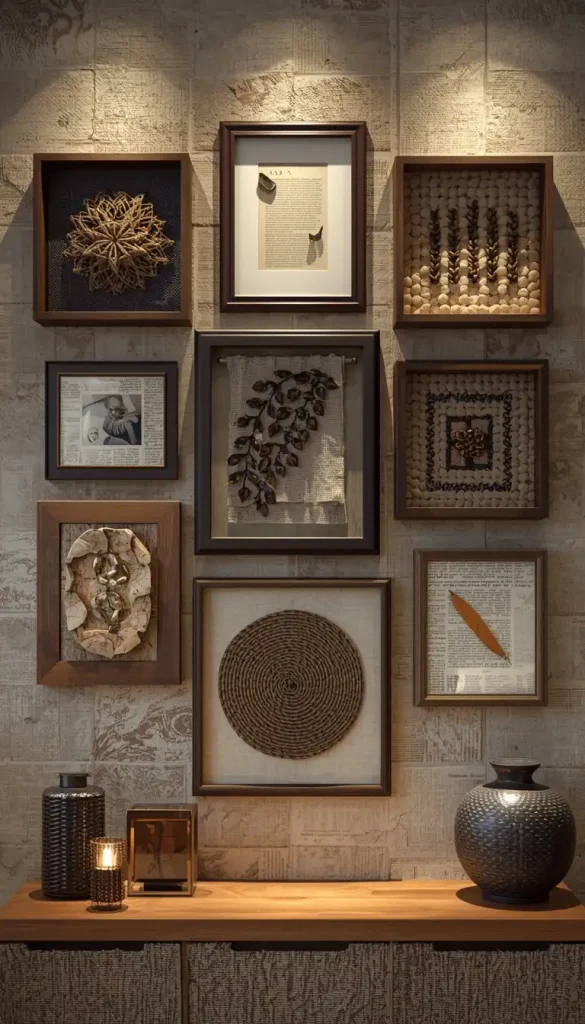
Adding depth and texture is what takes your gallery wall from flat to visually dynamic. It introduces layers and variety, making the wall more engaging and interesting.
Depth can be achieved by incorporating elements that extend beyond flat frames. This adds dimension and creates a richer visual experience.
- Layered Frames – Slight overlaps for added depth
- 3D Objects – Include sculptures or shadow boxes
- Textured Art – Use fabric, embroidery, or woven pieces
- Material Variety – Mix wood, glass, and metal
Texture also helps break monotony, especially in neutral or minimalist designs. It adds character without requiring bold colors or patterns.
However, it is important to maintain balance. Too many textured elements can make the wall feel cluttered.
Designer Pro Tip: Introduce texture gradually to maintain a clean and cohesive look.
8. Keep It Evolving Over Time
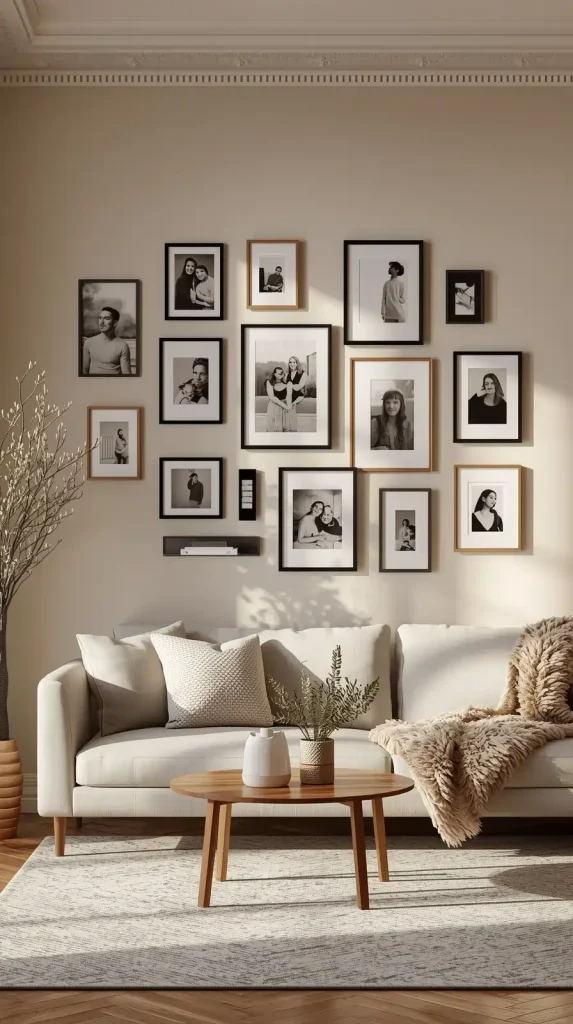
A story-based gallery wall is never truly finished. As your life changes, your wall should evolve to reflect new experiences, memories, and perspectives.
Keeping your gallery wall dynamic ensures that it remains relevant and meaningful over time. It also prevents your space from feeling stagnant or outdated.
- Add New Pieces – Include recent memories and achievements
- Rotate Items – Refresh the wall seasonally
- Update Layout – Rearrange for a new look
- Remove Old Items – Keep only what feels relevant
An evolving gallery wall allows you to continuously reconnect with your space. It becomes a living part of your home rather than a static decoration.
This flexibility also gives you the freedom to experiment and refine your design as your style changes.
Designer Pro Tip: Leave small gaps in your layout so you can easily add new pieces in the future.
Final Thoughts
Designing a gallery wall is not just about filling empty wall space. It is about creating a visual story that reflects your personality, your experiences, and the moments that matter most to you. A well-designed gallery wall brings both emotional value and aesthetic beauty into your home.
Many gallery walls fail to make an impact not because of a lack of style, but because they lack intention. Randomly chosen pieces, poor layout planning, and inconsistent themes can make even beautiful items feel disconnected. By focusing on meaningful elements, maintaining balance, and planning your layout carefully, you can avoid these common mistakes.
By making thoughtful choices like selecting a clear theme, using cohesive frames, balancing sizes and spacing, and adding personal touches, you can transform any blank wall into a powerful focal point. Even small adjustments can elevate the overall look and feel of your space.
A gallery wall is not something that needs to be perfect from the start. It can grow and evolve over time as your story continues. With creativity, patience, and attention to detail, you can create a gallery wall that feels authentic, inviting, and truly yours.
You might also like: 15 Modern Bedroom Ideas for a Calm and Luxurious Feel
Frequently Asked Questions
What is a story-based gallery wall?
A story-based gallery wall is a collection of photos, artwork, and meaningful items arranged in a way that reflects your personal experiences, memories, and interests. Unlike traditional gallery walls that focus mainly on decoration, this approach emphasizes emotional connection and storytelling.
How do I choose the right theme for my gallery wall?
Start by thinking about what matters most to you and your family, travels, hobbies, or personal achievements. Choose a theme that naturally represents your life rather than forcing a trend. Keeping a consistent color palette or style will help unify your theme.
How do I arrange a gallery wall properly?
Before hanging anything, plan your layout using paper templates or by arranging pieces on the floor. Maintain consistent spacing (about 2–3 inches) and start with a focal point. You can choose layouts like grid, salon-style, or centered arrangements depending on your preference.
How high should I hang a gallery wall?
A good rule is to keep the center of your gallery wall at eye level, which is typically around 57–60 inches from the floor. This ensures that your wall is comfortable to view and visually balanced within the room.