9 Small Living Room Ideas That Maximize Space
A small living room doesn’t mean you have to sacrifice style, comfort, or functionality. In fact, compact living spaces can often feel more inviting, cozy, and visually appealing than large open-plan areas when designed with intention. Many people assume that a bigger room automatically creates a better living environment, but thoughtful design proves that even the smallest spaces can feel spacious and well-balanced.
The secret to making a small living room feel larger isn’t about expensive renovations or removing walls. Instead, it comes down to smart furniture selection, effective lighting, strategic layout planning, and simple, intentional styling choices. With the right approach, you can create the illusion of more space while improving both comfort and usability.
Modern interior design prioritizes balance and proportion over size. Elements such as color, lighting, and visual weight all influence how a room is perceived. Lighter tones can make a space feel open and airy, while well-placed lighting can enhance depth and dimension. Similarly, choosing furniture that fits the scale of the room helps prevent a cramped or cluttered appearance.
Another important factor is organization. A well-organized living room naturally feels larger and more relaxing. Clever storage solutions, multi-functional furniture, and minimizing unnecessary items can significantly improve both the look and functionality of your space.
These ideas are not temporary trends or quick fixes they are practical, time-tested design principles used by professionals to enhance small interiors. By applying them thoughtfully, you can transform a compact living room into a space that feels comfortable, stylish, and easy to live in.
Whether you’re decorating a small apartment, a studio, or a compact home, these small living room ideas will help you make the most of your space while maintaining a clean, modern, and welcoming atmosphere.
Table of Contents
1. Stick to a Light and Cohesive Color Palette
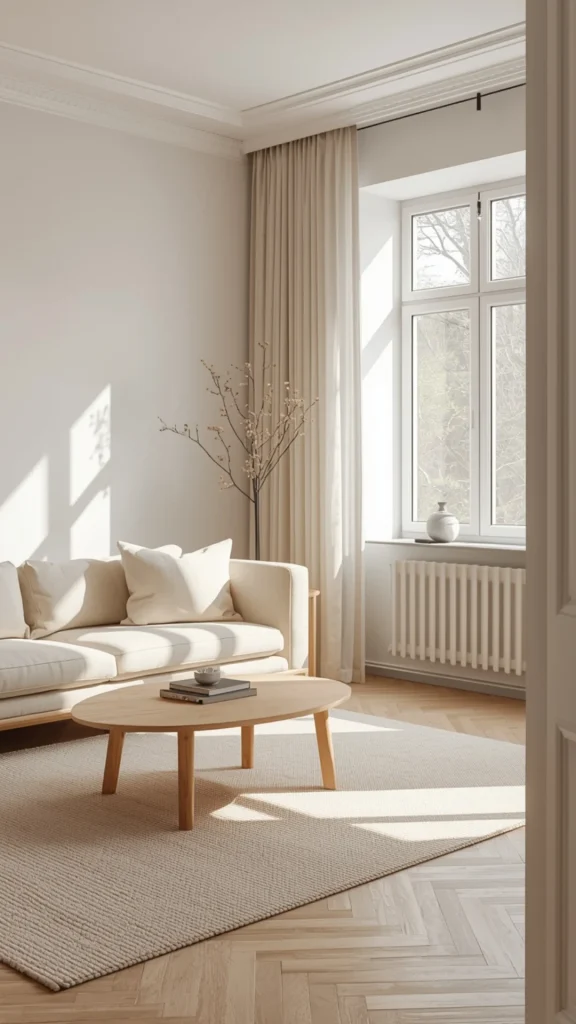
Color sets the foundation for spatial perception, and it is the single most impactful change you can make to how large your living room feels. Dark walls absorb light and can make a room feel smaller, while lighter tones reflect light and help create a sense of openness. While there are always exceptions, this approach works for the vast majority of small living rooms and is a reliable place to start. Strong contrasts and sharp color changes can visually divide a space, making it feel more confined.
Soft neutrals like warm white, beige, greige, pale gray, and muted sage work especially well in small living rooms. These tones feel calm and balanced while reflecting light evenly throughout the space. They also create a warm and welcoming atmosphere, avoiding the overly stark or clinical feel that bright whites can sometimes produce.
- Paint walls in warm white or soft greige to enhance brightness.
- Match trim and wall color to reduce visual contrast.
- Use similar tones across furniture and decor for seamless flow.
A cohesive color scheme helps reduce visual breaks and allows the eye to move smoothly across the room. When colors are consistent and well-coordinated, the space feels more unified and less cluttered. Instead of focusing on separate elements, the eye perceives the room as a whole, which enhances the sense of openness.
Designer Pro Tip: Avoid strong color contrasts between walls and ceilings. Keeping tones similar creates the illusion of height.
2. Choose a Sofa with Slim Arms and Raised Legs
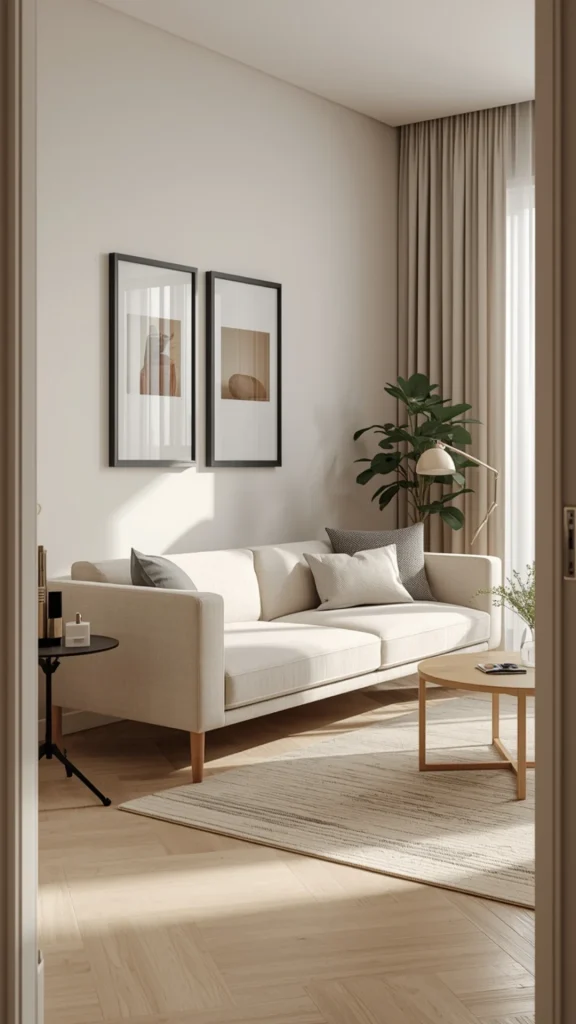
The sofa is often the largest and most visually dominant piece of furniture in a living room, and choosing the wrong one can make even a moderately sized space feel cramped. Oversized sofas tend to overwhelm small living rooms, taking up both visual and physical space before any other furniture is added. Instead, opt for a streamlined sofa with clean lines and a lighter, more open profile. This single choice can significantly improve how spacious and balanced your room feels.
It’s a common misconception that a bigger sofa automatically means more comfort. In reality, a well-designed compact sofa can offer the same level of comfort while allowing for better movement and functionality within the space. Choosing a sofa that fits the scale of your room helps maintain an open and practical layout rather than creating a crowded environment.
- Choose slim arms instead of bulky rolled arms.
- Opt for raised legs to expose more floor area.
- Stick to light upholstery tones.
Even a small amount of clearance beneath the sofa can make a noticeable difference. By allowing light and visibility to flow through, you create a lighter, more spacious feel that enhances the overall look and comfort of your living room.
Designer Pro Tip: Avoid sectionals unless your layout specifically supports them. A compact loveseat paired with an accent chair often works better.
3. Use a Large Mirror to Reflect Light
Mirrors are one of the oldest and most effective design techniques for enhancing small spaces, and they remain popular for a reason. When used correctly, they can significantly increase the sense of light and openness in a room. Unlike simple decorative elements, mirrors actively reflect light and create depth, making the space feel brighter and more expansive.
A common mistake is using several small decorative mirrors that have little impact on the overall space. To achieve the best results, it’s far more effective to use one large mirror positioned thoughtfully within the room.
- Place a large mirror opposite a window.
- Choose thin, minimalist frames.
- Avoid cluttering the wall with multiple small mirrors.
A well-positioned mirror can dramatically improve natural lighting by reflecting sunlight across the room, helping brighten areas that would otherwise feel dim. It also creates the illusion of added depth, almost like extending the room beyond its physical boundaries. This simple addition can make your living room feel more open, airy, and visually spacious.
Designer Pro Tip: A floor-length leaning mirror adds visual height and a modern aesthetic.
4. Opt for Multi-Functional Furniture
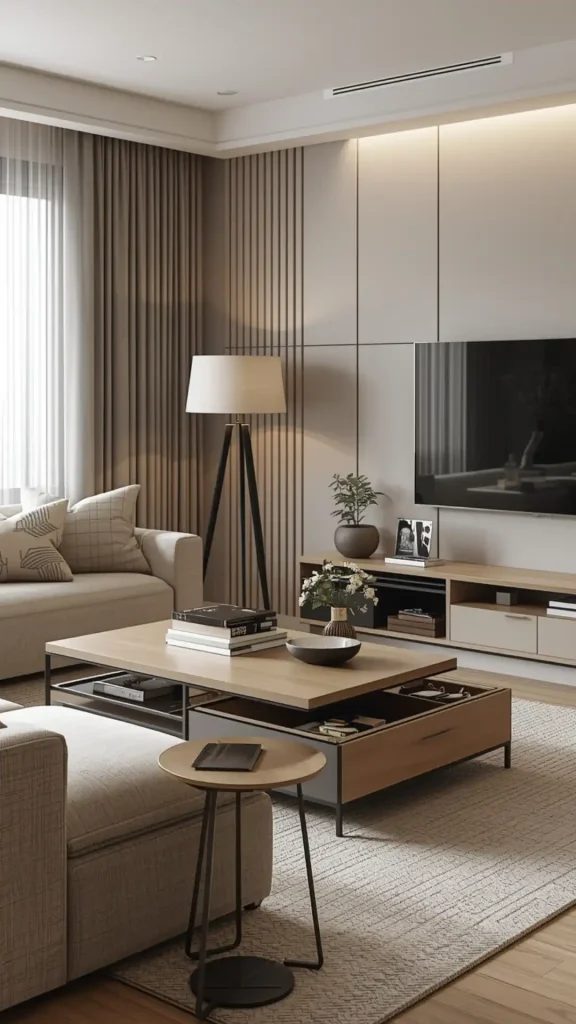
In a small living room, space is limited, so every piece of furniture needs to be chosen with purpose in mind. Ideally, each item should serve more than one function. Single-purpose furniture can quickly take up valuable space, leading to a cluttered and crowded environment.
This doesn’t mean you need overly complex or gimmicky designs. The most effective multi-functional furniture pieces are simple, practical, and blend seamlessly into your space while offering added utility.
- Choose a coffee table with hidden storage.
- Use ottomans that double as seating.
- Select nesting tables instead of bulky side tables.
Multi-functional furniture helps reduce clutter while keeping your living room practical and comfortable. It allows you to have extra seating when needed, without permanently taking up space. It also provides smart storage solutions for everyday items, helping you maintain a clean and organized look without adding unnecessary furniture.
Designer Pro Tip: Avoid furniture that visually blocks pathways. Maintain clear walking routes.
5. Maximize Vertical Space
Almost everyone designing a small living room makes the same mistake: focusing only on the floor. When floor space is limited, the key is to look upward. Walls and vertical space are often underused, yet they offer a huge opportunity to add both storage and style without taking up valuable living area.
Most people naturally focus their attention around eye or waist level, which means the upper portions of a room are often overlooked. By shifting your design focus upward, you can change how the entire space is perceived and create a more balanced look.
- Install tall, narrow shelving units.
- Hang curtains close to the ceiling.
- Use vertical wall art instead of horizontal groupings.
Vertical design helps draw the eye upward, making ceilings appear higher and the room feel more open. Guiding attention toward the upper part of the space creates a sense of height and airiness. When done well, this simple approach can make a standard ceiling feel significantly taller and the entire room more spacious and comfortable.
Designer Pro Tip: Leave breathing room between decor items on shelves to avoid visual heaviness.
Watch this video to discover practical small living room ideas that help maximize space without sacrificing style. From smart furniture choices to lighting and layout tips, these simple strategies will make your compact living room feel brighter, more open, and comfortable. Perfect for apartments and small homes, these ideas are easy to apply and budget-friendly.
6. Keep Window Treatments Light and Airy
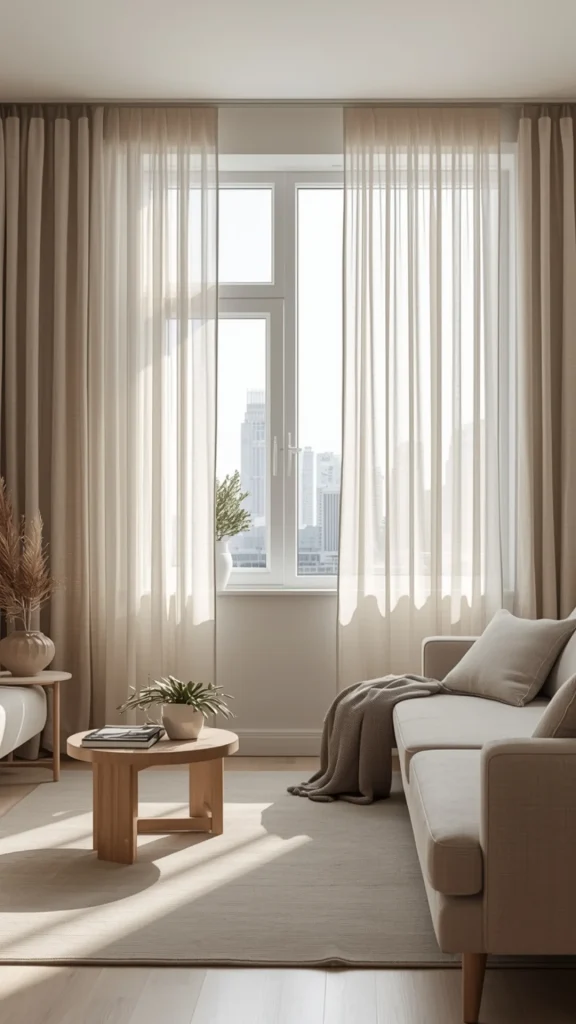
Windows are one of the most important features in a small living room, and the wrong window treatments can undo all your design efforts. Heavy curtains can overwhelm the space by blocking natural light, breaking up the wall visually, and making the room feel smaller and more enclosed.
Natural light is one of the most valuable elements in a compact space, so your main goal with window treatments should be to maximize how much light enters the room.
- Choose sheer linen or lightweight fabrics.
- Extend curtain rods wider than the window frame.
- Hang curtains high to create height illusion.
Natural light plays a key role in making a room feel open and airy. Extending the curtain rod beyond the window frame allows curtains to sit fully off the glass when opened, making the window appear larger than it actually is. It’s a subtle detail that may not be immediately noticed, but it has a powerful effect on how spacious the room feels overall.
Designer Pro Tip: If privacy is needed, layer sheer curtains with hidden roller blinds.
7. Define the Space with a Properly Sized Rug
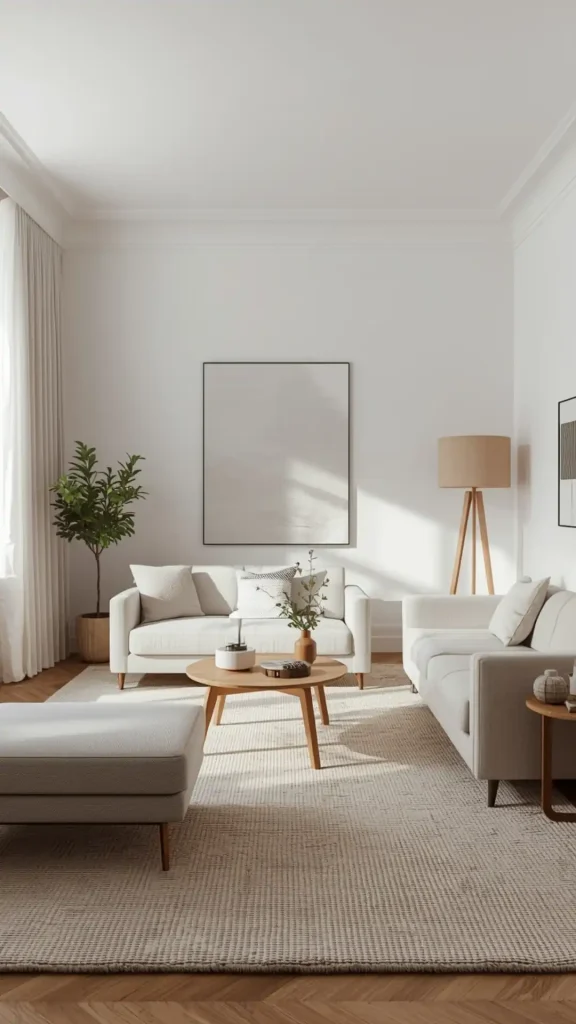
This is one of the most common design mistakes in small living rooms: choosing a rug that is too small. Many people assume that a smaller room requires a smaller rug, but in reality, the opposite is true. An undersized rug can visually shrink the space by breaking up the floor and making furniture feel disconnected and unbalanced.
A rug is not just a decorative element – it acts as the visual foundation that brings your entire layout together. When chosen correctly, it helps define the space and creates a sense of cohesion.
- Ensure front legs of sofa sit on the rug.
- Choose light or subtle patterns.
- Avoid overly busy designs.
A properly sized rug anchors your furniture and unifies the room. It creates a single, clearly defined area that the eye reads as one cohesive space rather than separate pieces. Even with well-chosen furniture and décor, the wrong rug size can make the entire room feel disjointed and less comfortable.
Designer Pro Tip: For most small living rooms, an 8×10 rug works better than a 5×7.
8. Layer Warm Lighting Instead of One Overhead Light
Lighting can completely transform how a room feels, and in small living rooms it plays an even more critical role. Harsh overhead lighting often creates strong shadows that make a space feel smaller. A single ceiling light tends to concentrate brightness in the center while leaving corners dim, which can visually shrink the room.
Layered lighting, on the other hand, helps distribute light evenly throughout the space, making it feel brighter, softer, and more open.
- Use warm white bulbs (2700K–3000K).
- Add table lamps and floor lamps.
- Install wall sconces if possible.
Layered lighting reduces dark corners and creates a more balanced atmosphere. When light comes from multiple sources at different heights, it softens shadows and enhances the overall sense of space. This approach can turn a room from feeling tight and enclosed into one that feels warm, inviting, and comfortable.
Designer Pro Tip: Avoid cool “daylight” bulbs. Warm tones create depth and comfort.
9. Declutter and Embrace Minimal Styling
At the end of the day, none of these design strategies will work if your living room is cluttered. Clutter is the biggest enemy of small spaces. Every small item left out adds visual weight, and over time, all those little things combine to make the room feel crowded and cramped, no matter how well you’ve designed everything else.
This doesn’t mean you need to adopt extreme minimalism or remove all personal touches. It’s about being intentional with what you display and keeping surfaces clear.
- Limit decorative accessories.
- Keep coffee tables clear.
- Store remote controls and small items out of sight.
Negative space is one of the most powerful design tools in a small room. The empty areas on your walls and surfaces aren’t wasted – they give the room breathing space, allowing furniture, décor, and architectural features to stand out. Thoughtful use of negative space makes the living room feel calm, open, and inviting rather than overwhelming.
Designer Pro Tip: Follow the “edit regularly” rule. Remove one item for every new piece added.
Final Thoughts
Designing a small living room that feels spacious is completely achievable with intentional choices. You don’t need a big budget, major renovations, or to compromise on comfort or style. Key strategies include using light colors, selecting slim furniture, emphasizing vertical design, layering your lighting, and incorporating smart storage solutions.
Modern living room design is about balance and flow, not filling every corner. Even small changes, like upgrading your lighting or replacing heavy curtains, can dramatically improve how the room feels. Many people are surprised at the difference a single adjustment can make in transforming a cramped space into a bright, inviting one.
You don’t have to implement everything at once. Start small, simplify your layout, and gradually build your ideal living room. Even updating one element each month can result in a completely transformed space before you know it.
For more ideas and inspiration, explore our Living Room category to discover additional modern design tips and small-space solutions.
You might like: 10 Small Bedroom Ideas That Feel Spacious and Cozy
Frequently Asked Questions
How do I make a small living room look bigger?
Use light paint colors, large well placed mirrors, slim profile furniture, layered warm lighting, and intentional minimal decor.
What sofa works best in a small living room?
A slim, streamlined sofa with narrow arms and raised exposed legs works best for maintaining a feeling of lightness and openness.
Should I use dark colors in a small living room?
Dark colors can work very well as small accents or on one single feature wall, but lighter neutral tones generally create a much more consistent and spacious feel across the whole room.
How do I arrange furniture in a small living room?
Keep walking pathways clear and open, avoid pushing every piece of furniture against the walls, and always ensure the proportions of your furniture match the size of the room.